Noma Test Kitchen

I was going through some latest news and watched the following videos from Noma’s test kitchen with a wry, and dare I say it somewhat cynical, smile on my face. What is this all about?

Have a look and tell me. Is this genius? or is food becoming so pretentious and insular that we industry players are losing the reality? If it takes so long to play with an ingredient then can it really be worth it? Is any taste worth that? or are these boys now playing with our food so much that they have lost the very fact that there are perfectly wonderful tasty ingredients doing what nature intended without a push from them? Surely that’s enough.

I think that great food is about simplicity and that’s it. End of.

More on Peru later….


I have just returned from a two week trip to Peru taking in the varied sights of the Amazon rainforest, the Inca trail and finally the world’s highest Lake Titicaca. Our trip was not a culinary one, but I couldn’t help think about the fact that Peruvian food is capturing the imagination of most switched on foodies these days.

Last year, the key chefs of the world travelled to Lima to partake in the Mistura Festival which is Peru’s annual 10 day celebration of local food. It boasts street food, farmers, restaurants and a variety of focused corners showcasing the country’s chocolate, bread, coffee and of course the signature alcohol: Pisco. This September festival in Lima drew in 600,000 people this year so it is an impressive showcase. There has to be something to see when you consider the fact that Ferran Adria, Dan Barber, Heston Blumenthal, Michel Bras and Rene Redzepi all went to see what was on offer. It’s quite an impressive list of attendees. So how did Peruvian food come to be so important? Well you can pretty much put that down to one man: Gaston Acurio.

Gaston Acurio

Gaston and his wife Astrid have 28 restaurants around the world including the eponymous Astrid y Gaston in Lima which entered the World’s 50 best restaurant list at number 42 this year. He may be called the Jamie Oliver of Peru but frankly I think that under sells the influence of this man. He clearly leads the way in his country and has not taken that responsibility lightly. He is the father of the Mistura and as such has earned his place as a Peruvian national hero extolling the virtues of his very own Peruvian cuisine.

“If you’re fortunate enough to occupy a position where people listen to you, you need to use your voice wisely. One man can be strong, but if he uses his power to help his people, amazing things can happen. In Peru there is no ME. There is only WE” he says.

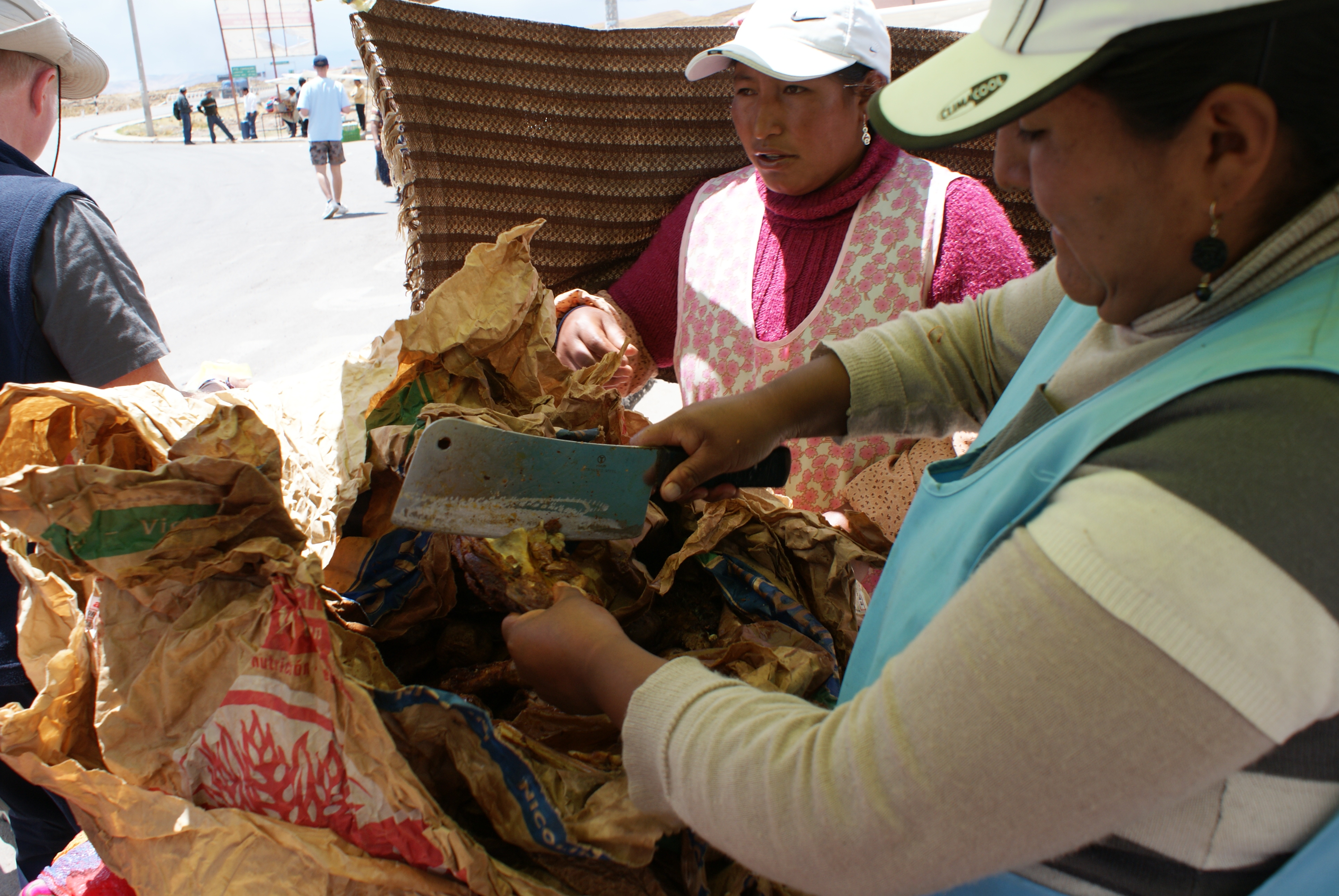
If you think this sounds a little unlikely, then think about the street food vendors we visited on our way up to Lake Titicaca. Who could have predicted that this unassuming Peruvian blanket covered a local lamb delicacy? even though it was served in a yellow plastic bag!

Underneath the blanket lay sheets of brown paper and inside there, slow cooked, seasoned, flavoured lamb that was crispy at the edges and soft and juicy inside. There was nothing glamorous about this. It was hacked apart with a cleaver and ripped with her hands so even the hardiest of street food veterans may have wondered what it was all about, but when you tasted it….well, let’s just say you had to be there.

Mr. Acurio was told about these ladies and their wonderful lamb some years ago. Our tour guide told me that Gaston made his way up to find them simply to try out the lamb and bring them back to attend the Mistura that year. Apparently, as a result of attending the festival, they now own a really successful restaurant in Lima serving the very same lamb. I recommend it wholeheartedly.

This week I have been pondering the latest fashion in restaurant offers to help shape a project that I am working on.

The whole seasonal, local sourcing remains front of mind for most food innovation and is still cited by many as the trend but the truth is that it should now simply be a way of life for anyone worth their weight in the food world.

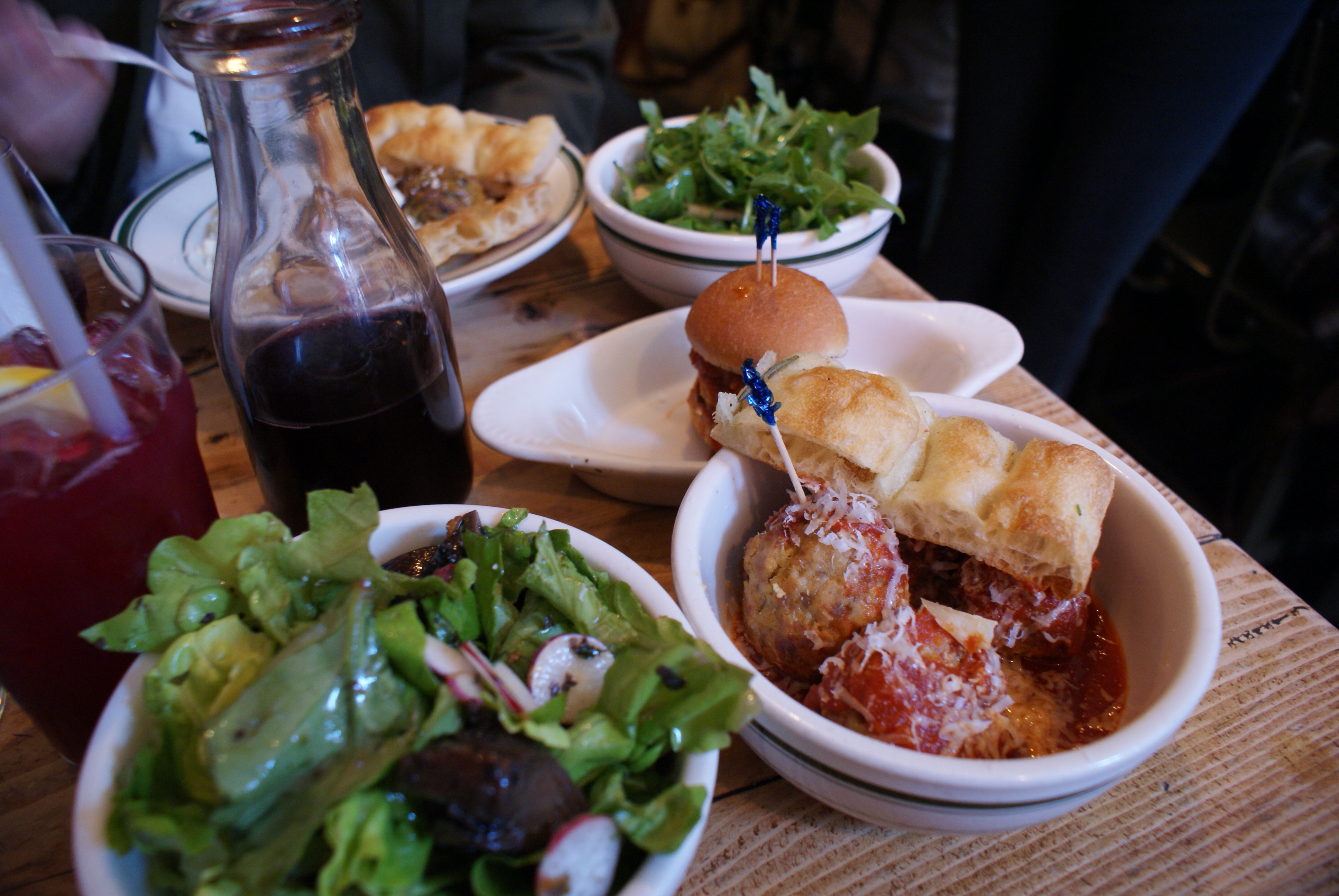
The Meatball Shop, NYC

Most menus now read like an essay with locally sourced precursors added to each & every item listed and I find myself slightly bored by it all. I tend to be drawn to restaurants that specialise in a unique cuisine or one key dish I like such as roast chicken or meatballs rather than the more generic menus simply because I can’t get excited by these any more….and I can’t guarantee a good meal.

So where does local, seasonal go from here?

I think the next iteration of that fashion is regionality. Not just regional ingredients but regional recipes made with seasonal, local, regional ingredients. I think at times of hardship, when we are watching the pennies, and feeling a little bit sorry for ourselves, we want comforting food. This inevitably harks back to our upbringing and local homely dishes that our mothers, or grandmothers made.

Heston’s Meat Fruit

The best example of a restaurant harking back to recipes of old is Dinner. You can always depend on Heston Blumenthal to be at the forefront, but what is so reassuring is that he thinks that it is indeed these recipes that are the ones to take us into the future. You only have to see the almost iconic status that his Meat Fruit recipe has achieved to think there must be something in all of this.

I was specifically looking at the North East region for my latest project and it is interesting that the more isolated parts of the British Isles are those that have the really big signature recipes. Cornish Pasties….Lancashire hotpot….Yorkshire pudding….they all have a history in their roots and a place in our hearts.

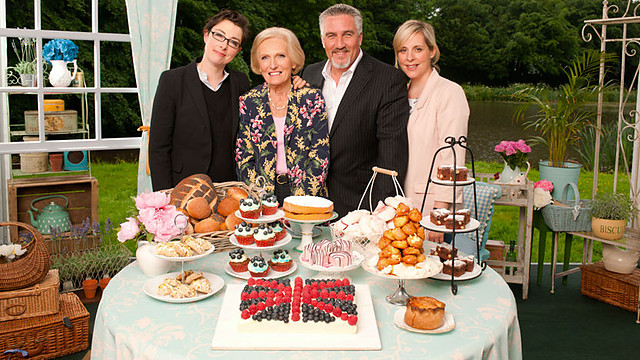
Inevitably it is the baking elements that are the most embedded in our psyche and I guess that is because of the romantic notion of Mum baking at home and the sensory memory that evokes. It’s why I am not surprised at the success of the Great British Bake Off and all those classic dishes they make. In the North East they have the stottie and that will definitely be featuring in my new project.

This week I also went to the Real Bread Festival at the Southbank. Those Real Food people have extended the now permanent Real Food Market under the Royal Festival Hall awnings to include other specialist markets on the calendar including bread, chocolate, tea & coffee and cheese & wine. Sadly there wasn’t the range of bread specialists that I was expecting, rather a tiny handful of passionate bakers selling their wares. It all felt a little sad and left me wondering how these people really make a living.

So let’s resurrect the Mrs Beeton in us and go back to those home baking recipes that conjure up memories of old. Instead of croissants and brownies, how about scones and eccles cakes? The cupcake is evolving into the fairy cake for some bakers so there must be hope for us all.

I think I am going to have to bite the bullet and get a Twitter account.

One of my current work projects involves a big rebrand and as a result we are considering the role of social media and how we need to use it to best promote the company. Sir Martin Sorrell recently said “Twitter is a PR medium, not an advertising medium” which got me thinking about the role it will play for us and also in the future. I think the lovely Mr. Sorrell may need to rethink his view over time.
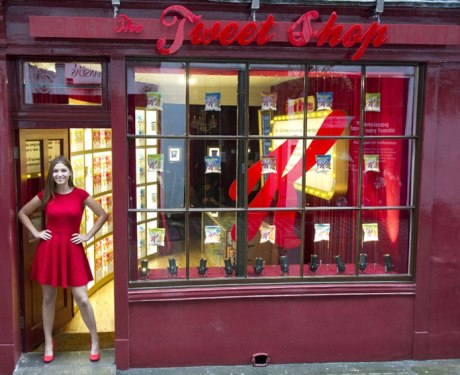
Kellogs pop up Tweet Shop

This week saw the last few days of the Kellogs pop up Tweet Shop in Soho which is a real first and one that will have us all re-evaluating the role of Twitter in our social media campaigns. Promoting the new Special K cracker crisps, consumers were encouraged to tweet from a choice of three statements or make up one of their own and in exchange, they receive a box of their chosen flavour. Tweets are the new currency. This is a really clever move taking the power of social media and combining it with the ever growing strength of word of mouth.

In this age of Twitter, word of mouth (read tweet) is increasingly important. In fact, it has been said that 92% of consumers trust recommendations from people they know and that translates to up to 50% conversion.

It is the insight into the industry that I know will suck me in as soon as I have an account. I was looking up Tom Sellers to keep an eye on his latest venture and suddenly you get a glimpse at his choice of restaurants, suppliers, friends and food connections: Tom Kerridge, Nate Green, Adam Byatt, James Knappett and of course Chef Keller. The legend that is Thomas Keller has 202,151 followers. This compares to Gordon Ramsay who has 1,034,062 which only goes to show the power of TV. But both genius Thomas and dear old Gordon pale to insignificance compared to the media savvy, personable and very popular Jamie Oliver who wins hands down with 2,587,156 followers. Unbelievable.
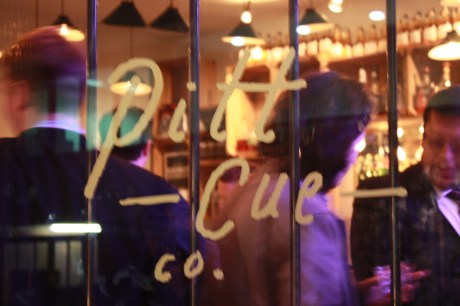
For the food industry, the Twitter route has facilitated the growth of markets and pop up concepts, not to mention bums on seats with last minute availability making some of the best spots open to all. You only have to look at the entrepreneurs doing a great job in the industry to see how it is done. Pitt Cue Co continue to impress in this field, but others are equally strong: Mr. Jones tells me that The Ribman is doing a great job and so undoubtedly we will be eating ribs very soon. And if that’s anything to go by, then ribs will be closely followed by burgers, mussels, yum buns, doughnuts and lots more. Mr. J. is also talking about all the food markets, day and night, that we need to frequent and I am, as always a willing compatriot for that.

What is fascinating is how many people are following these guys and just how many tweets they clock up. The most committed is The Ribman who has clocked up over 25,000 tweets. He may have an unhealthy love of West Ham and a controversial taste in T-shirts but he also has a personality and a conversation that others want to hear. We follow the person as much as the food.

So, Mr. Sorrell. You may be the most powerful man in advertising, but maybe the power of Twitter will win out. Is this still only PR or do you as a leader in the advertising world need to think again?
Design a site like this with WordPress.com
Get started