I have been judging at the Great Taste Awards this week.

Judging rooms at Wincanton, home of the Guild of Fine Food

These awards were set up by the Guild of Fine Food in 1993 and since then thousands and thousands of producers have submitted their products for rigorous judging at these annual awards. Some would say they are the Oscars of the fine food industry but whichever way you look at it, these awards are a fascinating and commercially beneficial process that I enjoy partaking in every year.

I remember doing ‘award-winning’ campaigns at M&S and it was a great generator of sales, especially in the wine category but the kind of uplifts that the winners of GTA see on their products put that campaign to shame. The little sticker that producers can apply once they win can generate three to five fold increases in their volume sales and some won’t even express the scale of the benefit as it is so spectacular.

There are levels of winners with one star being awarded to those products that really do a great job of delivering the taste of their product. Two stars is something really outstanding in flavour and three stars…well three stars come when you experience that moment when words aren’t really enough. A three star product is normally greeted by the judges with gasps, smiles and all round moans of enjoyment. These are genuinely the best of the best.

And some time in the Summer these three star products are once again cooked up for the judges to taste and find the best of the best. Last year they numbered 124 out of the 7500 or so submitted products so just over 1.6%. Which shows how difficult it is to get to this standard. The hard hitting movers & shakers of the food world are wheeled in to give the final winner of all winners judging. And some weeks later they are unveiled at a celebratory event. Last year, the supreme champion was an Irish corned beef from McCartneys of Moira and the year before it was a cobnut oil from Hurstwood farm in Kent.

Supreme Champion!

So what can we learn from all of this?

The first rule of thumb is the credibility of the award itself. The Guild have a good reputation within the speciality food industry and work very hard to promote the credentials of their process. All products are blind tasted and on finding a product to be worthy of an accolade, the judges pass it on to other tables for verification with a robust arbitration panel to keep us all in check. This is all about the taste of the product as that is all you get. A naked, unpackaged, unbranded sample of (hopefully) deliciousness.
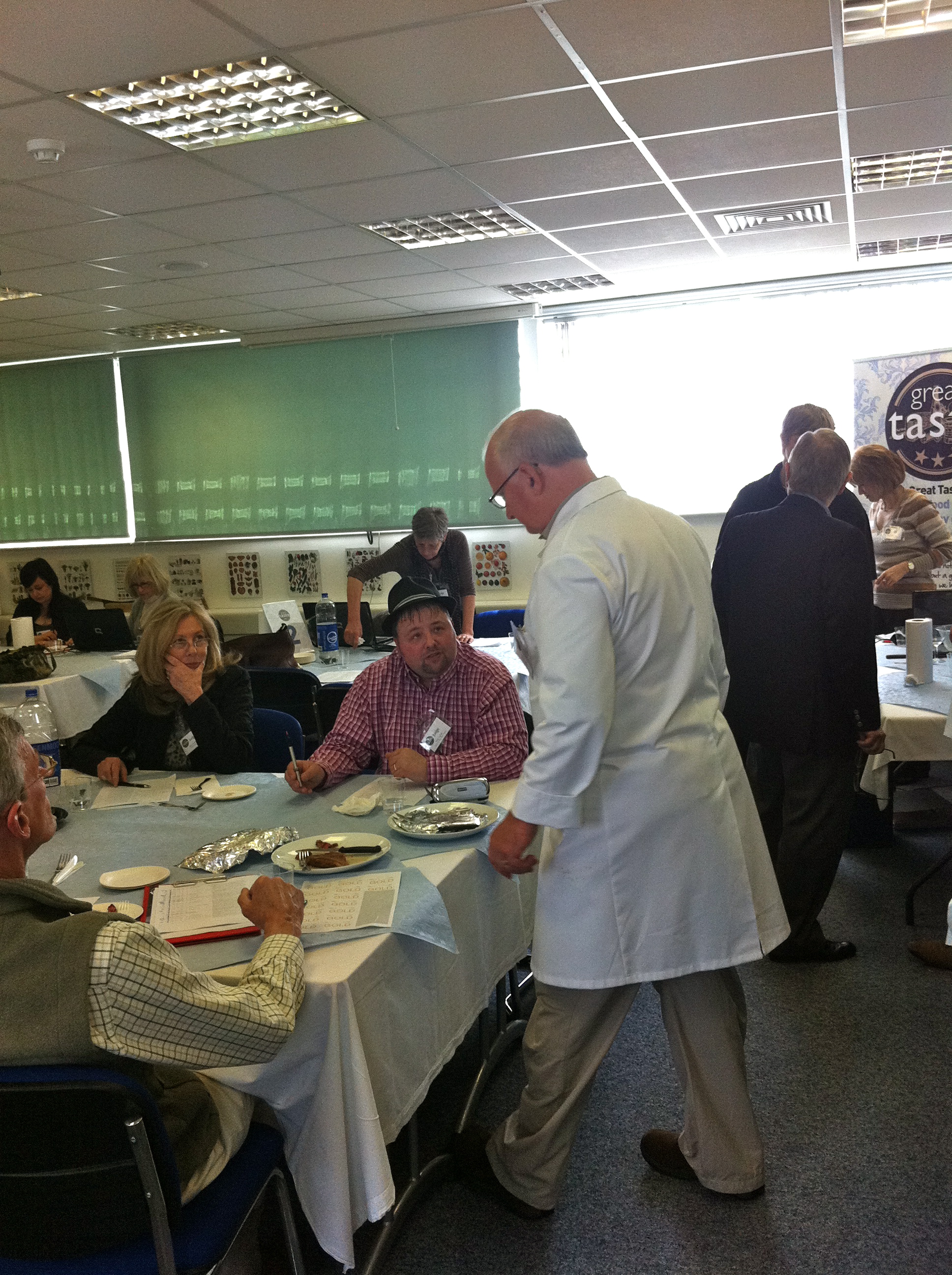
The amazing Mike. Judge & jury ... who arbitrates the judging of all 8500 products! What a trooper.

Knowing that this year there are over 8500 products being submitted from over 1800 producers in 290 categories, you will understand that sadly there are lots that do not make the grade and when you sit down at your judging table you only hope that you are going to have a good day. As a co-ordinator, it is my job to record the feedback and to give constructive comment to the producer of products that do not make the grade. Over the past two days, I have tried 113 products from bacon, salmon, pork & chicken meals to jams, curds & marmalades. We were challenged with a plethora of cakes, chocolates & biscuits and cajoled with alcohol, cordials and many other delicacies. Sometimes I wonder why anyone would think a combination would work (rose & fudge anyone?) and at other moments I marvel in the things we are getting to see at our table such as the Zambezi honey last year and today a petit four described as the “resin from manna tree with cardamom, almonds & pistachio”.
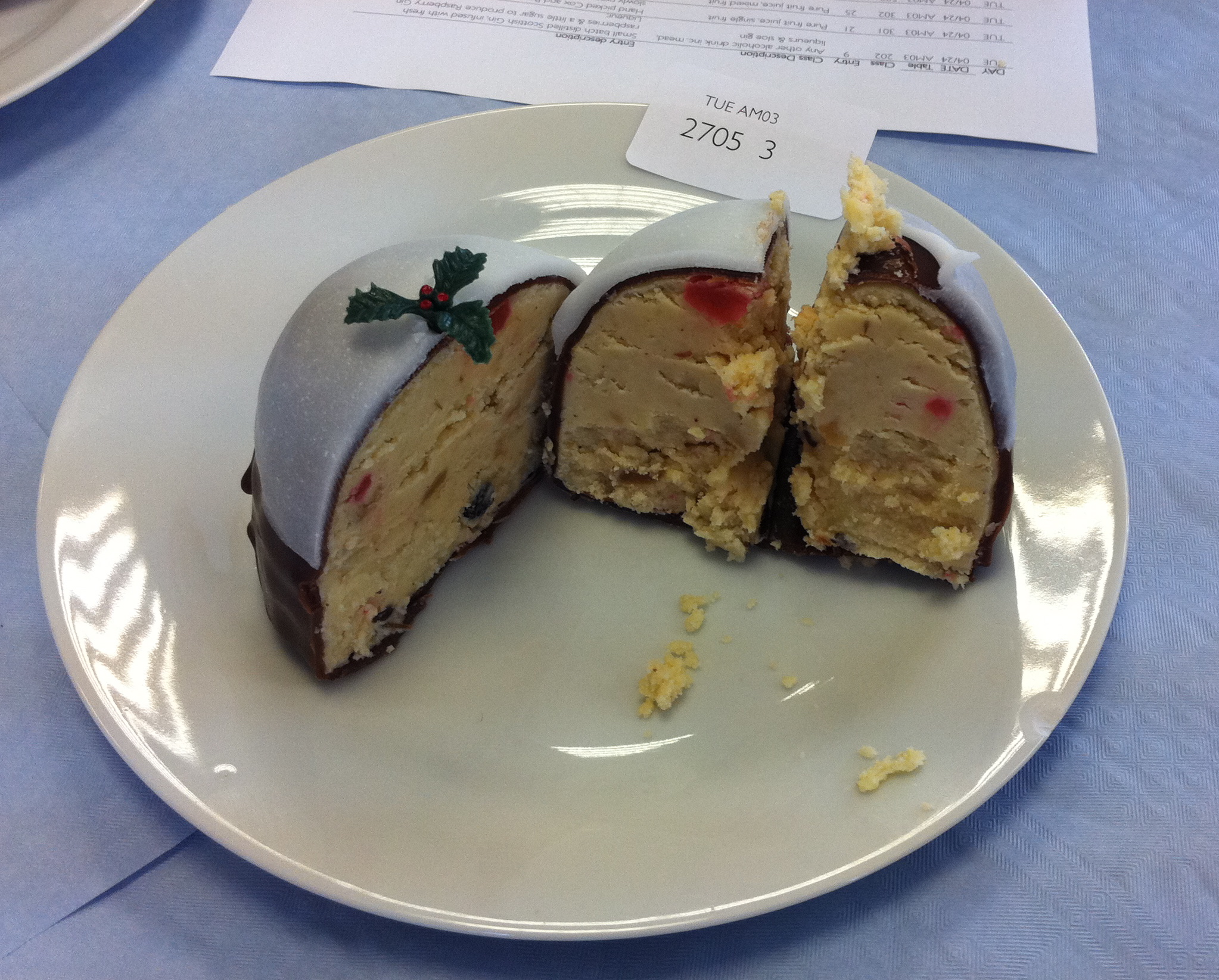
Christmas pudding cheese anyone? Just to clarify: seasonal cheese with vine fruits & cherries all soaked in liqueur

I am banned from telling you any of the results until the end of the judging which is going to be in June, but this won’t stop you being able to find all the answers on the Guild of Fine Foods website. Go. See. Try.

What I can tell you is that there are always themes in terms of flavours. Chilli continues to be prominently added in all sorts of ways to both savoury & sweet food and clearly the salted options of salted caramel & salted chocolate have become positively mainstream. This is a far distance from my first salted caramel experience in 2005 at the wonderful Recchiuti in San Francisco’s ferry building. For me, that remains the benchmark for all those chocolate attempts, but don’t take my word for it. Traceability of protein and locality of produce are as important as ever and classic British ingredients are ever more important with experiments around gooseberries, rhubarb, varieties of apple, rapeseed and elderflower all playing their part.

Apart from a wonderful insight into the world of fine food, you also get to meet some real characters playing their part in the food industry. There is a distinct difference between those coming to London to judge and those in the head office at Wincanton, but both venues offer a fascinating cross section of food geeks who spend their time pontificating about all things food. It is such fun for me. Especially as I am accompanied by two good friends who make the whole experience end to end fun.

So next time you are looking out for something different, look for the 3 star GTA label on pack and know that behind that small disc of paper lies a mighty product that really is the cream of the crop.

The cherry blossom in full bloom

I bought Mr B a cherry tree for Christmas.

I really enjoy buying presents for people and trying to find the perfect thing for them. My only rule is that I have to like what it is I buy even if it isn’t something I need or want. So you can imagine that lots of my presents are food related. The whole cherry tree thing came about because another friend of mine had given one to his partner last year and I just loved the idea of it. You get your own tree for a year including a chance to see it blossom in the Spring, collect the fruit in the Summer and have a farewell bash for your tree in the Autumn. It is such a great way to protect the trees themselves, to support the British fruit growing industry and most importantly a great opportunity for a family day out.

Our tree - with a smattering of blossom!

We are all aware that the weather has not been too favourable for the farming community so far this year and the cherry tree people are scarred with the same issues, so clearly the blossom thing was a bit slow in the making. Still, after a few lengthy newsletters detailing the ins and outs of the weather, growth, soil etc. they finally made the call and invited us to join them in a blossom party this weekend.

So off we all went to partake in the hog roast, eat scones with cherry jam, drink cherry juice and try the cherry choc chip ice cream. Who knew there were so many things to do with cherries? Well I guess we will when we are inundated with our stash of cherries this Summer. Watch this space! I bought a little cherry pitter whilst I was there to get us in the mood.

Off in search of our tree

The hog roast was popular - plenty of crackling and apple sauce

Still, for me this weekend embraced all that is good about the British community. I am not sure if it was the fact that the cherry tree people had such initiative in creating this club of cherry tree owners, or the sheer gumption of all those who turned up in rather cold wet conditions or even the whole community spirit it generated, but the whole thing was great fun. Mr B’s kids learned all about growing fruit and the English cherry business and I got to indulge in all things cherry for a day.

Believe it or not, there is a waiting list for renting a cherry tree so if you are interested in trying it out next year, get your name down on their website.

I couldn’t believe my ears whilst watching Saturday Kitchen this weekend. It all started very innocently with Alexis Gauthier, French chef extraordinaire, making a chicken wing dish and talking about his London restaurant. The debate moved onto France and how narrow the food choices are with Alexis claiming he only discovered new varieties of cuisine once he had crossed the Channel. The French, he said, are “a bit too French sometimes”. He went on to say that he found the UK and specifically London food scene more progressive than France. Interesting.

Then yesterday there was an article on chocolatier Paul A Young timed perfectly for the Easter weekend. In it, the Australian head chocolatier Michael Lowe said he moved from Australia to work in the chocolate industry over here because “Brits are more open to ideas”.

So what is it about the British and is this all true?

I thought Jamie Oliver showcased the unique position we Brits have in his Great Britain series where he played homage to the multicultural influences that pervade our country. There is no doubt that the heritage of our  British Empire alongside an openness to welcome in people from all over the world has led to local communities making wonderful authentic food and we saw many examples on that show.

Marry that authenticity up with the passion that drives food industry experts and out pops some really great cooking in restaurants, markets, shops and more all across the UK. But that is not enough to make us the most progressive food scene. And indeed, if you look at the top 50 restaurants of the world as voted in Restaurant Magazine by over 800 international experts, the UK comes 5th in the stats with 4 restaurants listed, as opposed to France at 8, Italy & USA at 6 and Spain at 5.

Maybe the clues come from the actual restaurants listed. In fifth place is the Fat Duck which fell two places in 2011. I guess we all know about Heston and his style. He is a food geek which is not only demonstrated by his choice of glasses. Geek-i-ness is a must have trait for someone doing superlative food. But I also see quirkiness and that feels like a British thing to me. How else do you explain Boris Johnson and his Wiff Waff escapade? Look it up!

'Mock Turtle Soup' awaiting the soup element which came via a gold tea bag of flavour

The Sound of the Sea

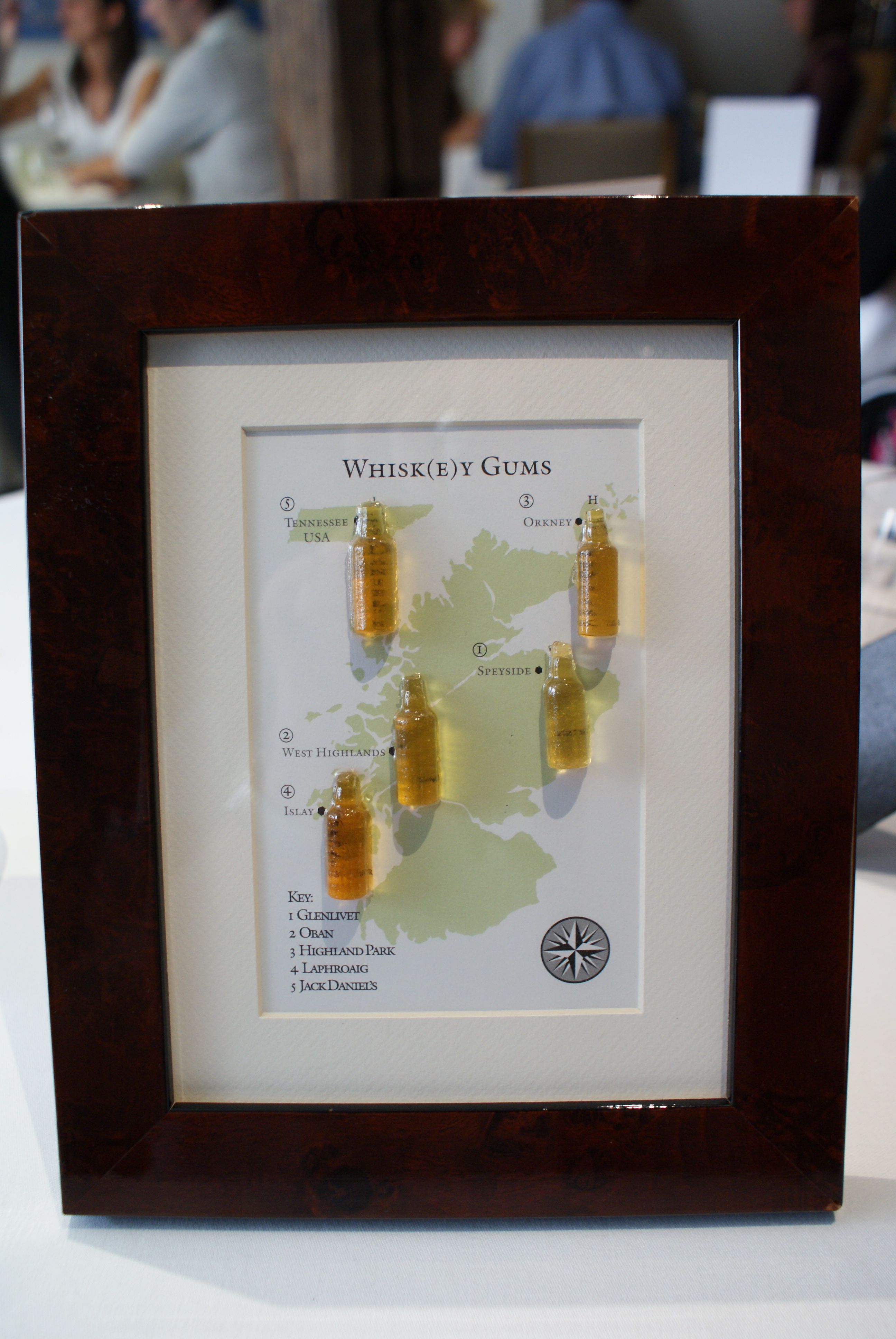
There is no doubting the genius of dishes like Sound of the Sea and Mock Turtle Soup which we have all seen on those TV shows, but for me there were other dishes that really endeared me to Heston’s Britishness, creativity and skill. The Whisk(e)y gums were a celebration of a great UK product and the sweet shop takes us all back to a bygone era of our childhood which many are trying to reproduce in new outlets opening today.

Whiskey Gums

The Sweet Shop

The other top 50 restaurant that has stood the test of time is St John and Fergus Henderson really does encapsulate that eccentric British character. Nose to tail cooking may not be your thing but it certainly celebrates the British farming industry in all its glory. And we shouldn’t knock his “buttock-like buns” either.

Ironically, the other two restaurants in the top 50 are The Ledbury and Hibiscus, with an Australian chef and French chef respectively. Well – clearly they came here to explore their ideas in a more conducive environment.

So there you have it. A combination of international influences, multiculturalism, eccentricity and quirkiness which all add up to a unique and wonderful place to explore food. Now where shall I go for dinner?

I was pondering this week about the concept of trust.

The first news story to get me thinking was published last Wednesday. It was reported that Australian retailer, Woolworths, were launching their ‘fresh or free’ campaign in an attempt to get one up on their arch rival Coles. The promotion allows customers to bring back any product that they deem unfresh and the retailer will offer a no questions asked refund. Whilst they were clear that this new idea was open to abuse, they said that they “trust the customer to do the right thing”. Wow!

The following day I was listening to a segment on the Today programme about peer to peer lending. Executive Director for financial stability at the Bank of England, Andy Haldane, made a speech in New York predicting that traditional high street banks will be replaced by peer to peer lenders in the future. In response, the co-founder of Zopa, Giles Andrews, talked about his business model. Zopa is an online lending service which is like a dating site for money lending. They match people who have spare money to invest with people who want to borrow money and let the magic happen. But it was when Mr Andrews was undergoing the usual aggressive, cynical line of ‘Today’ questioning that he admitted it all came down to one thing in the end…trust.

Last year, I was trying to figure out how I could afford to stay away on my trip to New Zealand without incurring huge costs for accommodation and as a last resort I investigated home swapping. It occurred to me that even if money is tight, I have a great asset at my disposal in my London flat and why not barter that. Home swapping is an ever growing market and ever since the film Holiday, has received a lot of press attention as money is tight and we are all looking for alternative options. Needless to say, Jude Law thrown in would be a bonus, or indeed Jack Black, if he floats your boat, but for me it simply opened up a whole new world of holidays. A week in Stockholm and 2 weeks in New York for an accommodation cost of £99 can hardly be scoffed at.

Home from home - my NYC flat for 2 weeks

Most of my friends and family thought this was all good and well but fundamentally would never go there as the whole concept required a significant amount of trust. After all, you are opening up your home, your haven, to a complete stranger. My theory is that they are doing the same to me, but I admit this requires a big leap of faith.

It is this connection and level of trust that is essential to the success of a retailer. Just as I am prepared to open up my home to others, so a retailer opens up their doors and then it is up to the other party to come on in. There have been a lot of pontification about the role of trust in retail brands over the years and in my old job at M&S, they were always very keen to be top of the YouGov survey on trust. I think it is equally important to new, small brands just as much as those more established large scale ones because it is a fundamental reason for customers to come back for more. In food, we trust that we are not going to be poisoned or even worse, killed by an untrustworthy dish and since this is a distinct possibility with an unscrupulous provider, then trust really is central to our industry. With the current fashion for small artisan hand made products as well as replicating authentic street food, this concept is more inherent than ever.

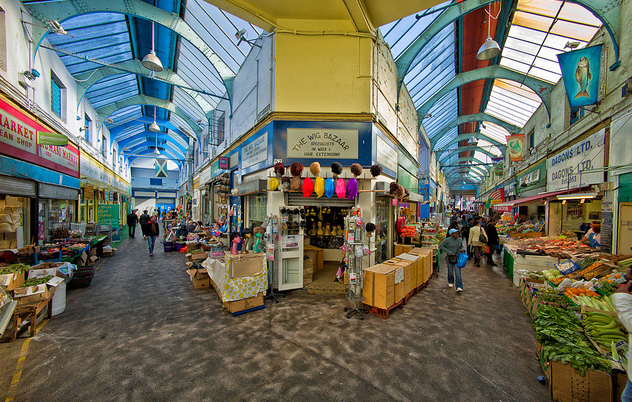
Try Brixton Village for some really great street food

So as a retailer how do you instil trust in your customers? Well for me, there are three simple principles:

Approachability. I really think the first way in is to be approachable so that the consumer can connect in some way with the brand. There are no set rules to that approach. It could be through design, or humour, or warmth, or fame and so many other routes. Whichever way you choose, it is critical to find a link with your target customer base.

Honesty. Whatever it is you do or stand for, be honest about it. Any exaggerated claims or over promised services will be caught out in the end, so believe in what you stand for and stand for what you believe in.

Credibility. Find a way of telling your customers about the lengths you go to delivering your brand experience. It doesn’t need to be heavy and lengthy. Sometimes a picture tells a thousand words and other times social media lets you have a loads of fun with it. But most of all you need to communicate.

With all that in mind, I am off to search for a lovely place to holiday this Summer. At the moment, I have wonderful homes shortlisted in Greece, Thailand, Costa Rica and Anguilla. I am just waiting to hear who fancies London. Let’s see who trusts me.

Design a site like this with WordPress.com
Get started